How to keep bathroom pipes on outside walls from freezing
Quick answer: Bathroom pipes freeze most often where they run along an outside wall with little insulation. Before winter, insulate exposed pipes and find your main water shutoff. On very cold nights, open the vanity doors, let the cold water drip and keep the heat steady. If only a trickle comes out, keep the faucet open and warm the pipe gently, never with an open flame. Call a licensed plumber if you can’t find, reach or thaw it.
Free. Send your project details and we'll get back to you within one business day. No obligation.
Why do bathroom pipes freeze on outside walls?
Water expands as it freezes, and that pressure can split a pipe. The American Red Cross lists the pipes that freeze most often. They include supply pipes in unheated areas and pipes against exterior walls with little or no insulation. The Red Cross names bathroom cabinets as one place to check.
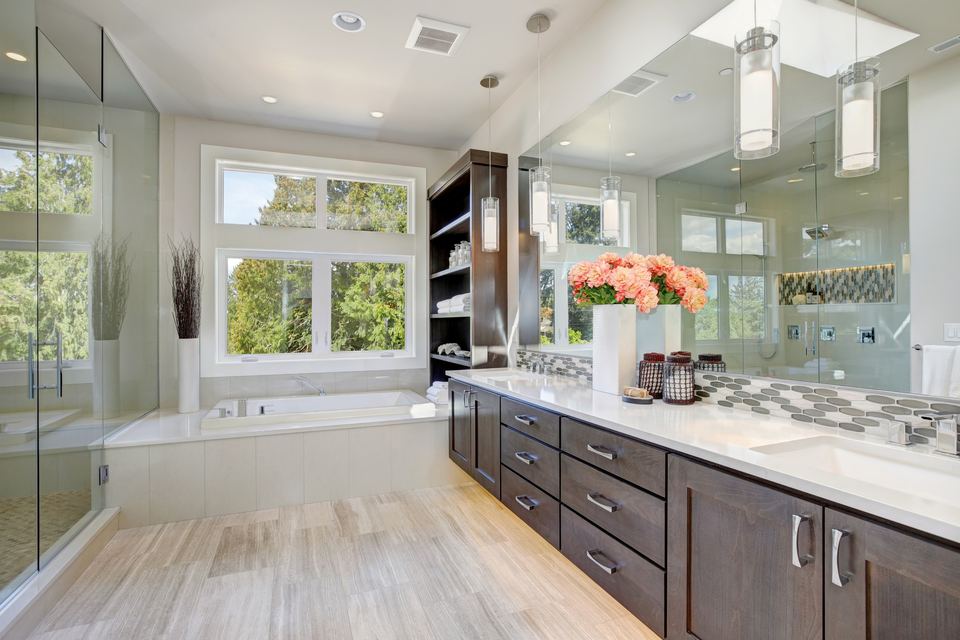
Bathrooms often have exactly that setup. The vanity sits under a window, the tub runs along the outside wall, or the toilet’s supply line comes up near it. In 2021, the manager of the Grand Rapids Water System said the same: pipes next to an outside wall are the most likely to freeze, Patch reported. A closed vanity cabinet keeps warm room air away from those pipes.
How cold does a Grand Rapids winter get?
Cold enough for long stretches. NOAA’s 1991-2020 climate normals for Grand Rapids show what a typical winter looks like:
| Month | Average low | Nights below 32°F | Days the high stays below 32°F |
|---|---|---|---|
| December | 24.7°F | About 26 | About 12 |
| January | 18.6°F | About 28 | About 18 |
| February | 19.5°F | About 25 | About 14 |
In an average January, the low also drops below 0°F on about 2 nights. A long cold stretch gives the cold more time to reach pipes inside an outside wall, so take the steps below before January, not during it.
How do I protect bathroom pipes before winter?
Do this in the fall, before the first deep cold. The Red Cross and the Grand Rapids Water System recommend these steps:
- Look under the vanity and behind access panels. Insulate both the hot and cold pipes in any cold spot.
- Use the right materials. Foam pipe sleeves work for pipes you can reach. UL-listed heat tape or heat cable suits pipes in very cold spaces.
- Add insulation to the basement, crawl space or attic where bathroom lines pass through.
- Find and mark the main shutoff. It’s usually near the water meter where the line enters the house. Make sure everyone at home knows where it is.
- Protect the water meter. The city says it’s the property owner’s job to keep the meter from freezing.
What helps on the coldest nights?
When the forecast drops well below freezing, a few habits make a real difference:
- Open the vanity doors so warm room air reaches the pipes. Move cleaners and medicines out of children’s reach first.
- Let the cold water drip at any faucet whose pipes run along an outside wall.
- Keep the thermostat steady day and night. The Red Cross notes a higher heating bill costs far less than a burst pipe.
- Keep the bathroom door open so heat can get in. The Water System also suggests a fan to move warm air from a heated room into a cold one.
If the house will be empty, leave the heat on, set no lower than 55°F.
How do I know a bathroom pipe has frozen?
The clearest sign is at the faucet. If you turn it on during a very cold spell and only a trickle comes out, suspect a frozen pipe. Other signs:
- One fixture has little or no water while the rest of the house is fine.
- The toilet tank refills slowly or not at all after a flush.
- The cold side works but the hot side doesn’t, or the other way around. Each side has its own pipe.
The Red Cross says frozen pipes are most likely against exterior walls or where the water service comes into the house through the foundation. Check those spots first.
What do I do if a pipe freezes?
Keep the faucet open and warm the frozen section gently. Use a heating pad, a hair dryer, a space heater kept away from anything that can burn, or towels soaked in hot water. Never use a torch or any open flame. Keep going until full pressure is back, then check the other faucets.
A frozen pipe may have split. The Water System advises being ready to shut the water off quickly as it thaws. Watch the wall, the floor and the ceiling below for water.
Call a licensed plumber if you can’t find the frozen spot, can’t reach it, or can’t thaw it. That includes pipes inside a closed wall.
How can a remodel stop pipes freezing for good?
If the same bathroom pipe freezes every winter, dripping and open cabinet doors only treat the symptom. The Red Cross suggests relocating exposed pipes for better protection. In practice, that means moving supply lines away from the cold outer wall or insulating behind them. Both are far easier while the wall is open.
That makes a remodel the right time to fix it. Our shower valve replacement and vanity installation pages explain what’s involved, and the 2026 cost guide has local planning ranges. If you’d like a licensed plumber to look at it, send your project details with the form below. We’ll get back to you within one business day, and it’s free.
How to thaw a frozen bathroom pipe safely
- Keep the faucet open
Leave the faucet that only trickles turned on. As the ice melts, the moving water helps thaw the rest of it.
- Know where the shutoff is
Before you start, find the main water shutoff, usually near the water meter where the line comes into the house. A frozen pipe may already be split and start leaking as it thaws.
- Warm the pipe gently
Use an electric heating pad, a hair dryer, a space heater kept away from anything that can burn, or towels soaked in hot water. Start near the faucet and work back along the pipe.
- Never use a flame
Don’t use a torch, a kerosene or propane heater, a charcoal stove or any other open flame.
- Check the other faucets
Keep warming until full water pressure is back. Then check every other faucet in the house, because if one pipe froze, others may have too.
Common questions
Should I let the bathroom faucet drip on cold nights?
If its pipes run along an outside wall or through a cold space, yes. The American Red Cross recommends letting cold water drip from any faucet served by exposed pipes when it’s very cold out. Even a trickle keeps water moving, which makes it harder to freeze. It costs a little water, far less than a burst pipe inside a finished wall.
Is it safe to thaw a pipe with a hair dryer?
Yes, the Red Cross lists an electric hair dryer as one safe way to thaw a pipe, along with a heating pad, a space heater kept away from anything that can burn, or hot, wet towels. Keep the dryer away from standing water. Never use a torch or any open flame. If the pipe is inside a closed wall, call a licensed plumber instead.
What should I set the heat to if I travel this winter?
Leave the heat on, set to no lower than 55°F, as the Red Cross recommends. Keep the bathroom door open so heat reaches it, and open the vanity doors if the sink is on an outside wall. If you’ll be gone a long time, ask someone to check the house, or ask a plumber about shutting off and draining the water.